

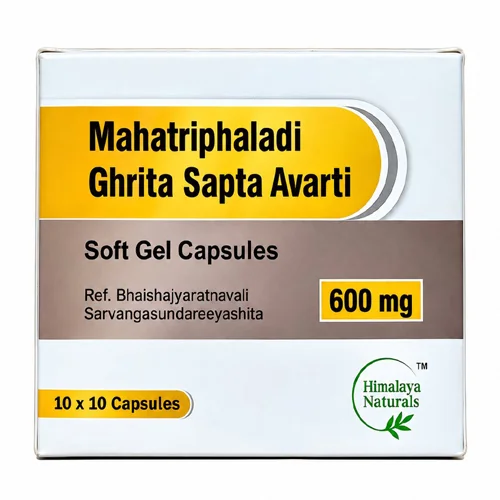
Himalaya Nutravedics Maha Triphaladi Ghritam Saptavarti Capsules
£19.99
PACK OF 100 SOFT GEL CAPSULES
-
Traditionally associated with Ayurvedic eye wellness practices.
-
Complements everyday visual wellness and healthy lifestyle routines.
-
Contains traditional Triphala ingredients used in Ayurvedic preparations.
-
Traditionally included in holistic wellness practices focused on general well-being.
Product Overview:
Himalaya Nutravedics Maha Triphaladi Ghritam Saptavarti Capsules are a traditional Ayurvedic ghee-based herbal formulation inspired by classical Triphala Ghrita preparations. Prepared using a cow ghee base and traditional Ayurvedic botanical ingredients, this formulation is associated with Ayurvedic eye wellness, visual well-being, and general physical wellness practices.
Supplement Ingredients:
Triphala, Amalaki, Haritaki, Bibhitaki, Go Ghrita (Cow Ghee)
Benefits:
-
Traditionally associated with Ayurvedic eye wellness practices.
-
Complements everyday visual wellness and healthy lifestyle routines.
-
Contains traditional Triphala ingredients used in Ayurvedic preparations.
-
Traditionally included in holistic wellness practices focused on general well-being.
How to Use:
-
Take the quantity specified on the manufacturer’s verified product label or as directed by a qualified Ayurvedic physician.
Safety Information:
-
Do not exceed the recommended dosage.
-
Discontinue use if any unusual reaction or discomfort occurs.
-
Store in a cool, dry place away from direct sunlight and moisture.
-
Keep out of reach of children.
FAQs:
Q1. What are Himalaya Nutravedics Maha Triphaladi Ghritam Saptavarti Capsules?
Himalaya Nutravedics Maha Triphaladi Ghritam Saptavarti Capsules are a traditional Ayurvedic ghee-based herbal formulation associated with eye wellness and general physical well-being. The preparation is based on classical Triphala Ghrita principles and presented in a convenient softgel format.
Q2. What are the main ingredients in Maha Triphaladi Ghritam Saptavarti Soft Gel Capsules?
The formulation is described as containing Triphala, traditionally composed of Amalaki, Haritaki, and Bibhitaki, prepared in a cow ghee base. Additional Ayurvedic ingredients may be included. The complete composition should be verified from the manufacturer’s official product label.
Q3. What does Saptavarti mean, and how should these capsules be used?
Saptavarti refers to a traditional Ayurvedic preparation method involving seven processing cycles. It describes the manufacturing process rather than a clinically established increase in effectiveness.
Brand
Himalaya Nutravedics
Related products