

Ayurvedic Wellness, Mental Wellness
Brahmi, Ashwagandha & Other Traditional Herbs: What Does Ayurveda Say?

Oct
Ayurveda has a long tradition of using plants as part of wider approaches to daily living. Brahmi and Ashwagandha are two of its best-known herbs, but a name on a label tells only part of the story. In Ayurvedic practice, a herb is considered alongside a person’s circumstances, diet, and routine, rather than as a one-size-fits-all solution.
If you’re curious about traditional herbs, it helps to separate what Ayurveda says about them from what modern research has established. Traditional use is interesting, but it isn’t proof that a herb can treat a health condition.
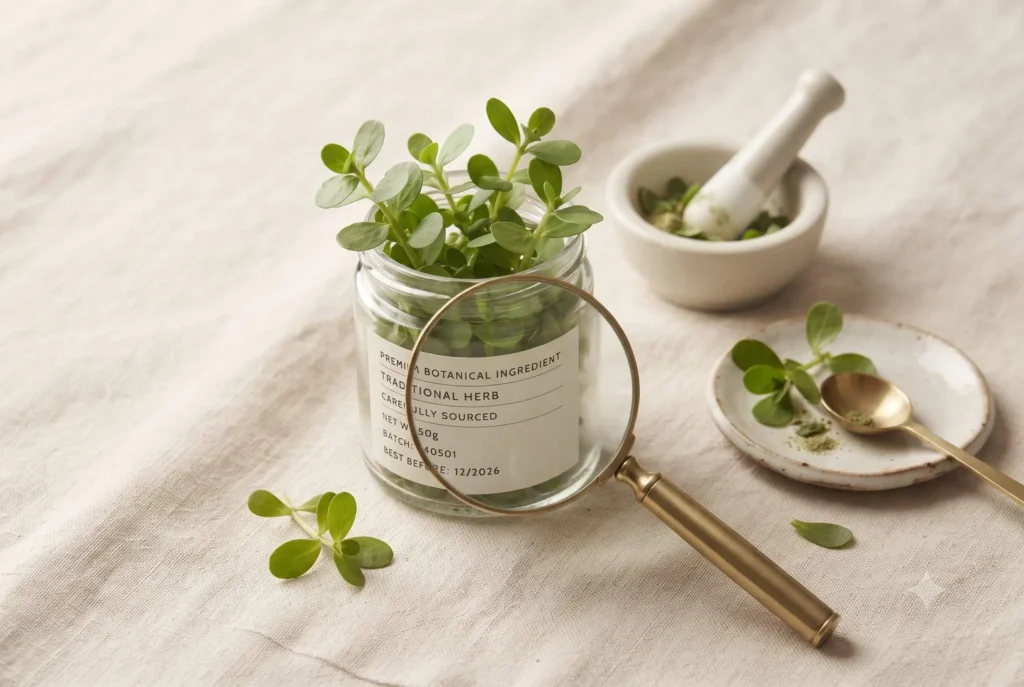
Brahmi: A name worth checking carefully
Brahmi is traditionally associated with learning, memory, and mental clarity in Ayurveda. You may also see it described as a medhya rasayana, a traditional term connected with supporting the mind.
There’s an important detail for shoppers: “Brahmi” can be used for different plants in different contexts. Before buying a product, check its botanical name on the label so you know exactly which ingredient it contains. Don’t assume two products labelled Brahmi have the same plant or formulation.
Ashwagandha: More than a wellness buzzword
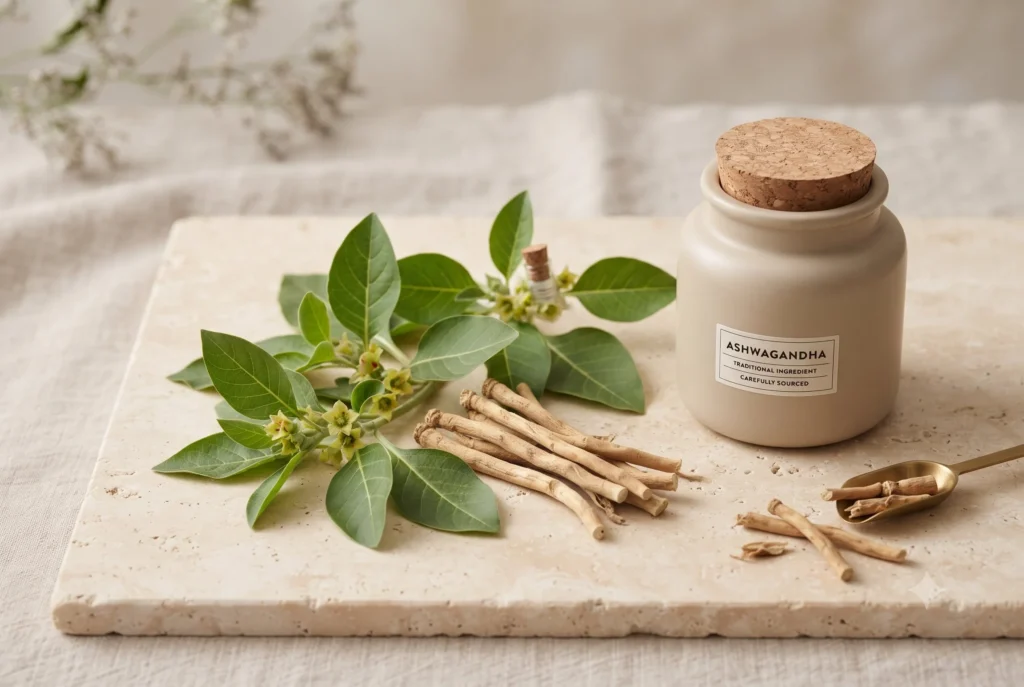
Ashwagandha is commonly described in Ayurveda as a rasayana, a category of preparations traditionally associated with nourishment and vitality. Its popularity today sometimes leads to much bigger promises than the evidence can support.
A traditional association does not mean Ashwagandha is suitable for everyone. It may interact with medicines or be inappropriate in some circumstances. If you’re pregnant, breastfeeding, have a health condition, or take medication, ask a qualified healthcare professional before using it.
What about other Ayurvedic herbs?
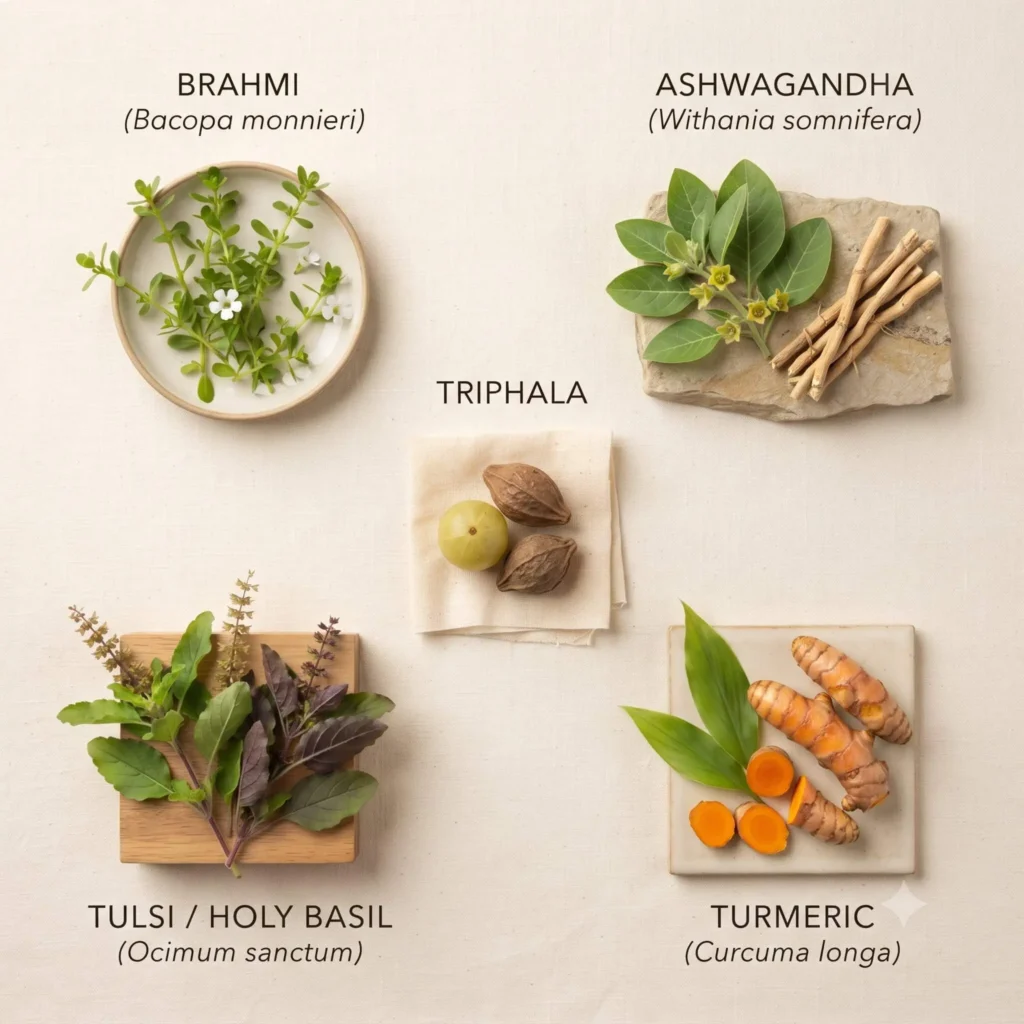
Ayurvedic traditions include many other plants and preparations. Tulsi, often called holy basil, is familiar to many people as a herbal tea. Turmeric is used in cooking as well as in traditional practices. Triphala is a traditional combination of three fruits, rather than a single herb.
Each has its own history, ingredients, and way of being used. That’s why it’s more useful to read a product’s full label than to choose it on the strength of a familiar name alone.
How to approach herbal products in the UK
When exploring a herbal product, start with a few practical questions:
- What is the botanical name of each ingredient?
- How much of each ingredient does a serving contain?
- Does the label give clear directions and cautions?
- Does the seller provide enough information to help you make an informed choice?
Be wary of products promising to cure an illness or replace prescribed treatment. “Natural” doesn’t automatically mean risk-free, and products with the same herb name can contain different ingredients or amounts.
Tradition, evidence and your own circumstances
Ayurveda offers a rich way to learn about plants, but responsible choices need more than tradition alone. Consider the quality of the product, the available evidence and your personal health circumstances. If you’re unsure, a pharmacist or other qualified healthcare professional can help you check whether a herbal product is appropriate for you.
Curiosity is a good starting point. Clear labels and careful questions are what turn it into an informed choice.
This article is for general information and does not provide medical advice. Do not use herbal products to diagnose, treat, or prevent a condition, or stop prescribed medication without speaking to a qualified healthcare professional.
