Uncategorized
Managing PCOS & PCOD Through Ayurveda: A Complete Guide to Hormonal Wellness
Jul
Introduction: Managing PCOS & PCOD Through Ayurveda
PCOS (Polycystic Ovary Syndrome) and PCOD (Polycystic Ovarian Disease) are among the most common hormonal conditions affecting women of reproductive age. They can influence menstrual health, metabolism, skin, fertility, and emotional well-being.
Although the terms PCOS and PCOD are often used interchangeably, they are not the same. This guide explains the differences in simple language and explores how Ayurvedic principles may complement modern healthcare through healthy eating, lifestyle habits, stress management, and personalised wellness practices.
Ayurveda should always be viewed as supportive care and not as a replacement for medical diagnosis or prescribed treatment.
What Is the Difference Between PCOS and PCOD?
Many people use the terms PCOS and PCOD interchangeably, but they are different conditions.
PCOD
PCOD generally refers to ovaries containing multiple immature follicles that may affect ovulation.
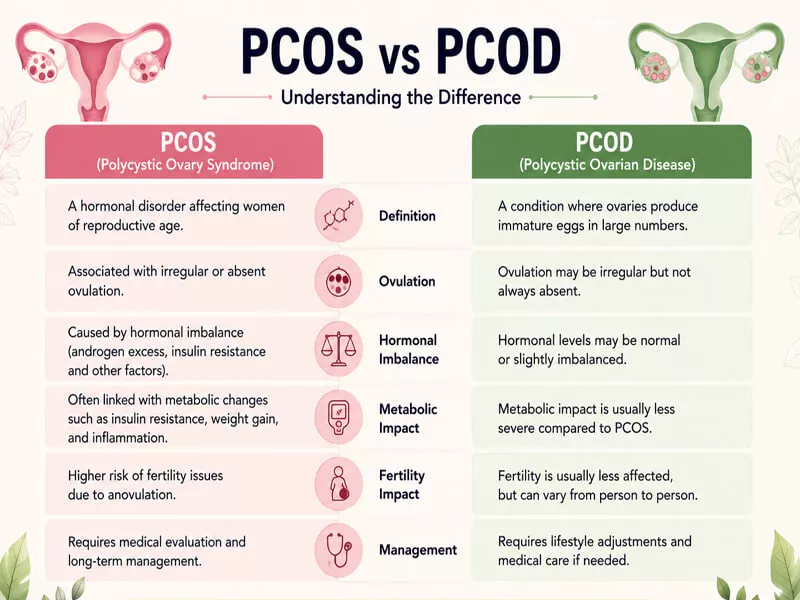
PCOS
PCOS is a recognised endocrine disorder associated with hormonal imbalance, irregular ovulation, and metabolic changes.
Both conditions require proper assessment by a qualified healthcare professional.
Common Symptoms of PCOS & PCOD
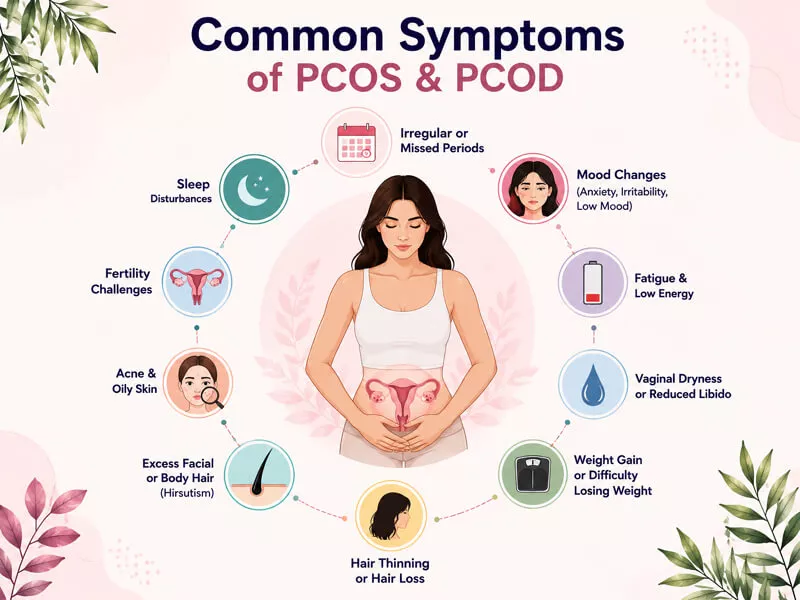
Symptoms vary from one woman to another. Some women experience only mild symptoms, while others may have multiple hormonal and metabolic changes.
Common Symptoms Include
- Irregular or missed periods
- Acne and oily skin
- Excess facial or body hair
- Hair thinning
- Weight gain
- Difficulty losing weight
- Fatigue
- Mood changes
- Fertility concerns
If symptoms become severe or persistent, consult a healthcare professional.
Causes and Risk Factors
There is no single cause of PCOS or PCOD. Instead, several factors may contribute.
Risk Factors
- Genetics
- Insulin resistance
- Chronic inflammation
- Poor dietary habits
- Physical inactivity
- Poor sleep quality
- Long-term stress
A personalised approach is often the most effective way to manage overall wellbeing.
Understanding PCOS & PCOD Through Ayurveda
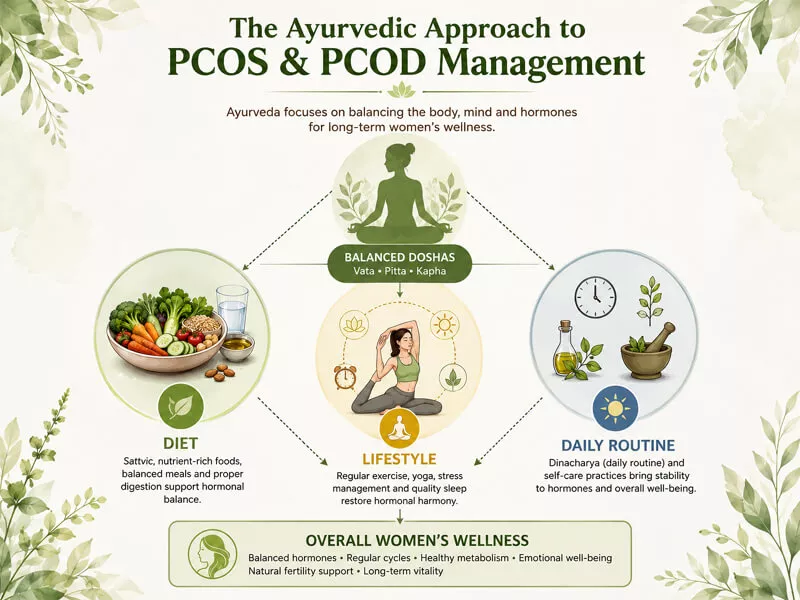
According to Ayurveda, health depends on maintaining balance between Vata, Pitta, and Kapha, healthy digestion (Agni), and proper elimination of metabolic waste (Ama).
Rather than focusing only on symptoms, Ayurvedic practitioners traditionally assess body constitution, digestion, sleep, stress levels, daily routine, and lifestyle before recommending personalised wellness practices.
Diet Recommendations for Hormonal Wellness
Healthy nutrition plays an important role in supporting overall wellbeing.
Foods to Include
- Fresh vegetables
- Seasonal fruits
- Whole grains
- Fibre-rich foods
- Healthy fats
- Nuts and seeds
- Lean protein sources
- Legumes
Foods to Limit
- Highly processed foods
- Refined sugar
- Sugary drinks
- Frequent refined snacks
Ayurveda also encourages regular meal timings and mindful eating habits.
Lifestyle Practices That May Support Hormonal Health
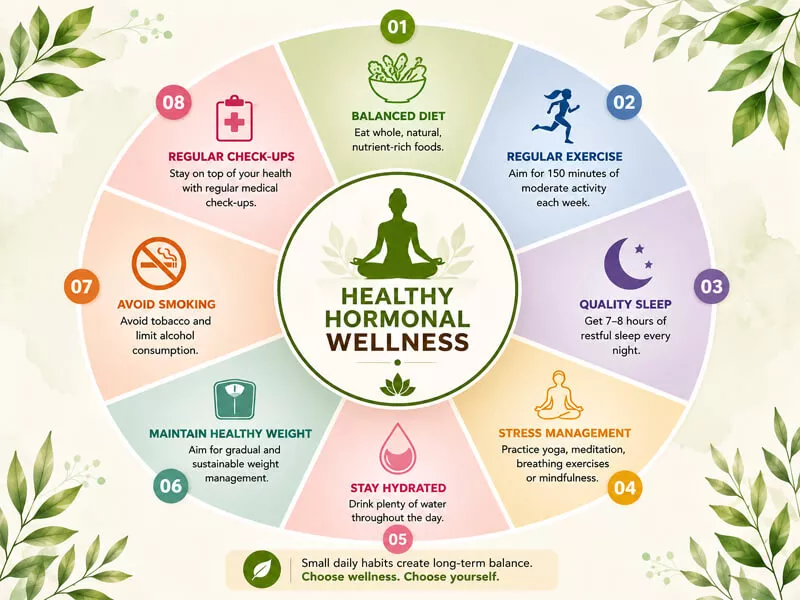
Healthy daily habits may complement medical care and support long-term wellness.
Healthy Lifestyle Tips
- Exercise for at least 150 minutes each week.
- Include strength training.
- Practise yoga or stretching.
- Walk regularly.
- Get adequate sleep.
- Manage stress with meditation or breathing exercises.
- Avoid prolonged sitting.
Traditionally Used Ayurvedic Herbs
Depending on individual assessment, Ayurvedic practitioners may traditionally recommend herbs such as:
These herbs are traditionally used to support women’s wellness and healthy metabolism. Herbal supplements should only be used under professional guidance.
When Should You Consult a Healthcare Professional?
Seek professional medical advice if you experience:
- Persistent irregular periods
- Heavy menstrual bleeding
- Severe pelvic pain
- Rapid weight changes
- Symptoms of diabetes
- Difficulty conceiving
- Planning a pregnancy
Early diagnosis may help identify associated health concerns.
Managing PCOS & PCOD Through Ayurveda: Key Takeaways
- Eat balanced meals rich in fibre.
- Stay physically active.
- Prioritise quality sleep.
- Manage stress every day.
- Maintain a healthy weight.
- Avoid smoking.
- Follow medical advice and regular health check-ups.
Frequently Asked Questions
Can Ayurveda cure PCOS?
No. Ayurveda does not claim to cure PCOS but may support overall wellness alongside medical care.
Can diet help manage PCOS?
A balanced diet may support metabolic health and overall wellbeing.
Is exercise important?
Yes. Regular physical activity is an important part of a healthy lifestyle.
Can herbs replace medicines?
No. Never stop prescribed medicines without consulting your healthcare provider.
Can yoga help?
Yoga may support flexibility, relaxation, and stress management.
Can women with PCOS conceive?
Many women with PCOS conceive successfully with appropriate medical care.
Should I take supplements without medical advice?
No. Always consult a qualified healthcare professional before starting supplements.
Related Articles
- Hormonal Health Guide
- Women’s Wellness Guide
- Healthy Weight Management
- Stress Management Guide
- Fertility & Reproductive Health
Medical Disclaimer
This article is intended for educational purposes only. It does not diagnose, treat, cure, or prevent any disease and should not replace professional medical advice. Always consult a qualified healthcare professional before making changes to your treatment, diet, or supplement routine.
