

Ayurvedic Wellness
Ayurveda for Daily Wellness in the UK: Natural Lifestyle, Diet & Holistic Wellbeing Guide
Nov
Introduction: Understanding Ayurveda for Modern UK Lifestyle
Modern life in the UK often comes with busy schedules, work pressure, irregular eating habits, reduced physical activity, and increased exposure to daily stress. These lifestyle factors can influence energy levels, digestion, sleep quality, skin health, and overall wellbeing.
Ayurveda, an ancient holistic wellness system originating from India, focuses on maintaining balance between the body, mind, lifestyle habits, and environment. Rather than focusing only on individual concerns, Ayurveda traditionally looks at the whole person and encourages daily routines that support long-term wellness.
Today, many people explore Ayurveda for daily wellness in the UK as they look for natural lifestyle practices, mindful routines, balanced nutrition, and traditional herbal wellness support.
This guide explains Ayurvedic principles, daily habits, diet choices, skincare approaches, lifestyle practices, and practical ways to safely introduce Ayurveda into everyday life.
Quick Takeaways
- Ayurveda focuses on balance and prevention-oriented lifestyle habits.
- Daily routines play an important role in Ayurvedic wellness.
- Food choices, sleep, movement, and stress management are key pillars.
- Ayurvedic herbs are traditionally used for general wellness support.
- Small, consistent lifestyle changes may support overall wellbeing.
What Is Ayurveda?
Ayurveda means “the science of life” and is a traditional wellness system that focuses on harmony between the body, mind, and surroundings.
The Ayurvedic approach views well-being as a combination of:
- Daily lifestyle choices
- Food habits
- Sleep patterns
- Emotional wellbeing
- Physical activity
- Seasonal changes
- Individual constitution
Unlike a one-size-fits-all approach, Ayurveda traditionally considers that every individual has unique needs. Lifestyle recommendations are often personalised according to factors such as routine, environment, and overall constitution.
The Core Principles of Ayurvedic Wellness
1. Balance Between Body and Mind
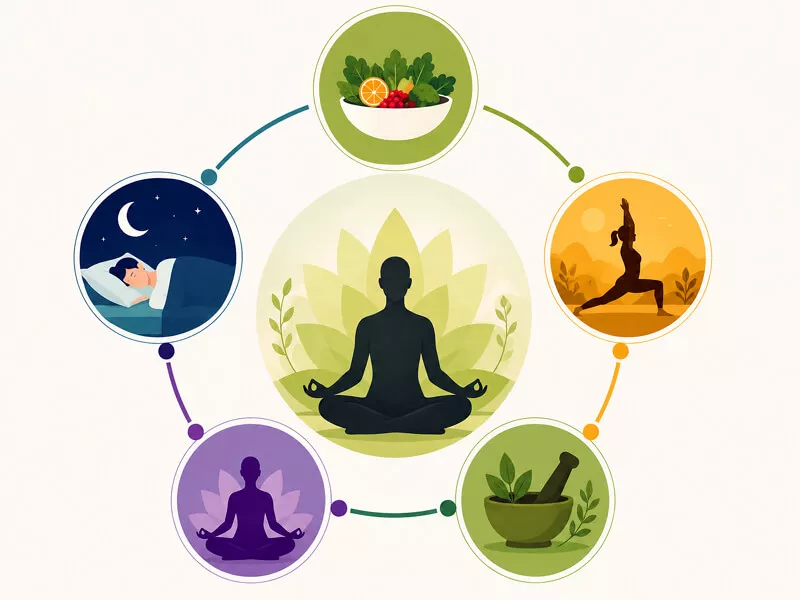
Ayurveda traditionally emphasises maintaining balance through healthy habits. Regular sleep, mindful eating, movement, and stress management are commonly recommended as foundations of wellbeing.
2. Importance of Daily Routine (Dinacharya)
One of the important concepts in Ayurveda is creating a consistent daily routine.
A balanced Ayurvedic routine may include:
- Waking up at a regular time
- Staying hydrated
- Practising mindful breathing
- Eating meals at consistent times
- Maintaining good sleep habits
- Creating time for relaxation
3. Understanding Individual Wellness Needs

Ayurveda describes three primary energies known as doshas:
| Dosha | Traditional Association | Wellness Focus |
|---|---|---|
| Vata | Movement and activity | Routine, grounding habits |
| Pitta | Transformation and metabolism | Cooling and a balanced lifestyle |
| Kapha | Stability and structure | Movement and energy balance |
Understanding these concepts may help people choose lifestyle habits that align with their personal wellness goals.
Ayurveda and Daily Wellness in the UK
The UK lifestyle can sometimes create challenges for maintaining consistent wellness habits. Long working hours, changing weather conditions, travel, and fast-paced routines may affect daily balance.
Ayurvedic lifestyle principles can be adapted to modern living by focusing on realistic habits rather than complicated routines.
Common Lifestyle Factors That Affect Wellness
Stress and Mental Wellbeing
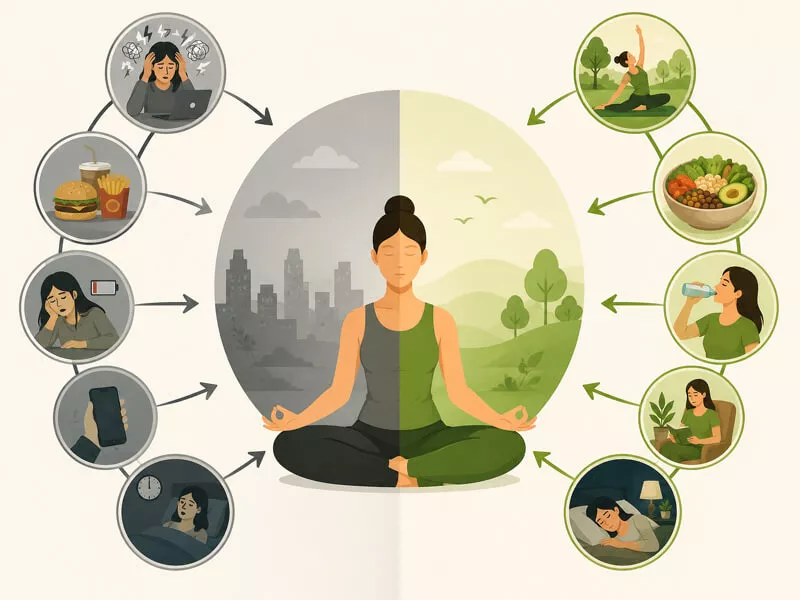
Daily responsibilities, work pressure, and constant digital exposure may contribute to feelings of tiredness and mental overload.
Traditional Ayurvedic practices that support relaxation include:
- Meditation
- Gentle yoga
- Breathing exercises
- Mindful routines
- Relaxing evening habits
Sleep Routine
Quality sleep is an important part of overall wellbeing.
Helpful lifestyle habits include:
- Maintaining regular sleep timing
- Reducing screen exposure before bed
- Creating a calm evening environment
- Avoiding heavy late-night meals
Digestive Wellness
Ayurveda traditionally places strong importance on digestive balance.
Supportive habits may include:
- Eating fresh, balanced meals
- Drinking enough water
- Eating mindfully
- Avoiding frequent overeating
- Maintaining regular meal timings
Ayurvedic Diet Tips for Everyday Wellness
Food is considered an important part of Ayurvedic lifestyle practices.

A balanced Ayurvedic-inspired diet commonly focuses on:
- Fresh ingredients
- Seasonal foods
- Variety of nutrients
- Mindful eating
- Balanced portions
Foods Commonly Included in an Ayurvedic Lifestyle
Examples include:
- Fresh fruits and vegetables
- Whole grains
- Legumes
- Herbs and spices
- Healthy fats
- Warm nourishing meals
Traditional Ayurvedic Spices
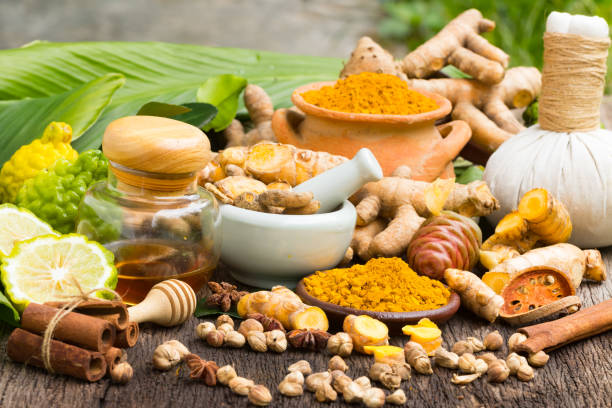
Many herbs and spices are traditionally valued in Ayurveda and commonly included in everyday cooking.
Examples:
- Turmeric
- Ginger
- Cumin
- Coriander
- Fennel
These ingredients are commonly used as part of traditional dietary practices and should be considered within an overall balanced lifestyle.
Ayurvedic Skincare and Natural Beauty Routine
Ayurveda traditionally connects skin wellbeing with internal balance, lifestyle, nutrition, and daily care.
A simple Ayurvedic-inspired skincare routine may include:
Gentle Cleansing
Using suitable cleansing habits helps maintain skin comfort and cleanliness.
Hydration and Nourishment
Supporting skin hydration through appropriate skincare and lifestyle habits may help maintain healthy-looking skin.
Balanced Lifestyle
Skin appearance can be influenced by:
- Diet
- Sleep
- Stress levels
- Environmental factors
- Daily care habits
Ayurvedic skincare focuses on supporting natural balance rather than quick cosmetic changes.
Educational Note
This content is created for educational and general wellness information. Ayurvedic practices and herbs may support healthy lifestyle choices, but they are not a replacement for medical diagnosis or treatment.
Always consult a qualified healthcare professional for persistent symptoms, medical concerns, or before making significant changes to your health routine.
Ayurvedic Herbs and Natural Wellness Support for Everyday Life
Ayurveda has traditionally used herbs, plants, and natural ingredients as part of a broader approach to maintaining wellbeing. In modern wellness practices, many people explore Ayurvedic herbs as a way to support balanced routines, mindful living, and overall health.
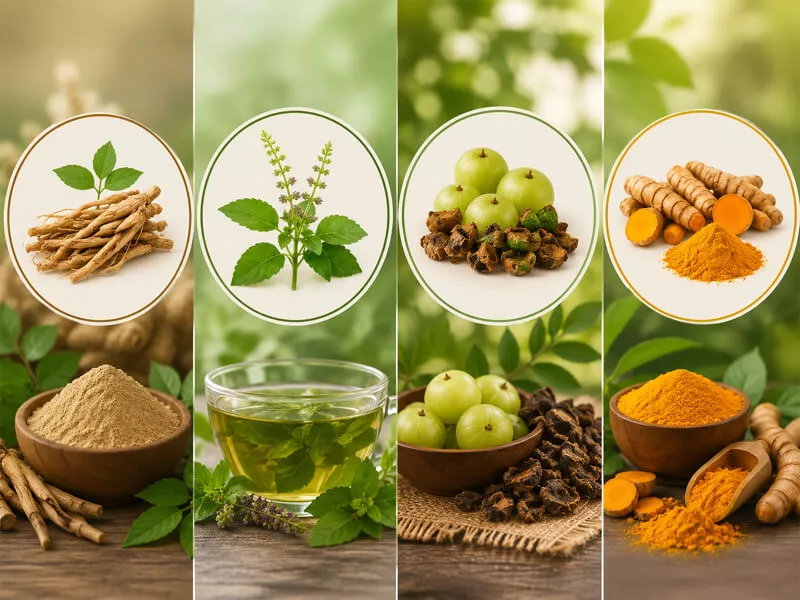
It is important to understand that herbs are not substitutes for medical care. Their use should be considered as part of a healthy lifestyle and, where needed, discussed with a qualified healthcare professional.
Traditional Ayurvedic Herbs Commonly Used for Wellness
Ashwagandha
Ashwagandha is one of the well-known herbs in Ayurveda. Traditionally, it has been used as part of wellness routines focused on:
- Stress management support
- Relaxation practices
- Energy and vitality support
- Maintaining daily balance
Many people include it in their lifestyle routines alongside sleep, nutrition, and exercise habits.
Tulsi (Holy Basil)
Tulsi is traditionally valued in Ayurveda and is commonly used in herbal wellness practices.
It is often associated with:
- Seasonal wellness support
- Daily herbal routines
- Relaxation and balance
Tulsi is commonly consumed as herbal tea or included in traditional formulations.
Triphala
Triphala is a traditional Ayurvedic combination of three fruits.
It is commonly used in Ayurvedic wellness routines that focus on:
- Digestive wellbeing
- Regular lifestyle habits
- Gentle daily support
A balanced diet and healthy routine remain important parts of digestive wellness.
Turmeric
Turmeric has a long history of use in traditional Indian practices.
It is commonly included in food and wellness routines because of its:
- Culinary benefits
- Traditional wellness value
- Antioxidant properties
Adding turmeric as part of a balanced diet is a simple way many people include Ayurvedic-inspired habits in daily life.
Building an Ayurvedic Daily Routine in the UK
A practical Ayurvedic routine does not need to be complicated. Small daily habits can help create a more balanced lifestyle.
Morning Ayurvedic Wellness Routine
A mindful morning routine may include:
Start the Day with Hydration
Drinking water after waking may help establish a healthy morning habit.
Gentle Movement
Light stretching, yoga, or walking can support flexibility and daily energy.
Mindful Breathing
Breathing exercises may help create a calm start to the day.
Balanced Breakfast
A nutritious breakfast can support daily energy and focus.
Midday Wellness Habits
The middle of the day is often the busiest time for many people.
Helpful habits include:
- Eating meals mindfully
- Taking short breaks
- Staying hydrated
- Maintaining good posture
- Spending time outdoors when possible
Evening Ayurvedic Wellness Routine
A calming evening routine may support relaxation.
Consider:
- Reducing screen time before sleep
- Creating a relaxing environment
- Eating dinner at a suitable time
- Practising gentle breathing or meditation
Ayurveda for Stress Management and Relaxation
Stress is a common part of modern lifestyles. Work responsibilities, digital overload, and busy schedules can affect overall well-being.
Ayurvedic lifestyle principles traditionally encourage practices that support calmness and balance.
Helpful habits may include:
Meditation
Regular meditation practice may support mindfulness and relaxation.
Yoga and Gentle Exercise
Yoga combines movement, breathing, and awareness, making it a popular practice in holistic wellness routines.
Nature and Rest
Spending time outdoors and creating regular rest periods may support a healthier lifestyle balance.
Seasonal Ayurveda Tips for UK Living
The UK experiences changing seasons, and Ayurveda traditionally places importance on adapting routines according to environmental changes.
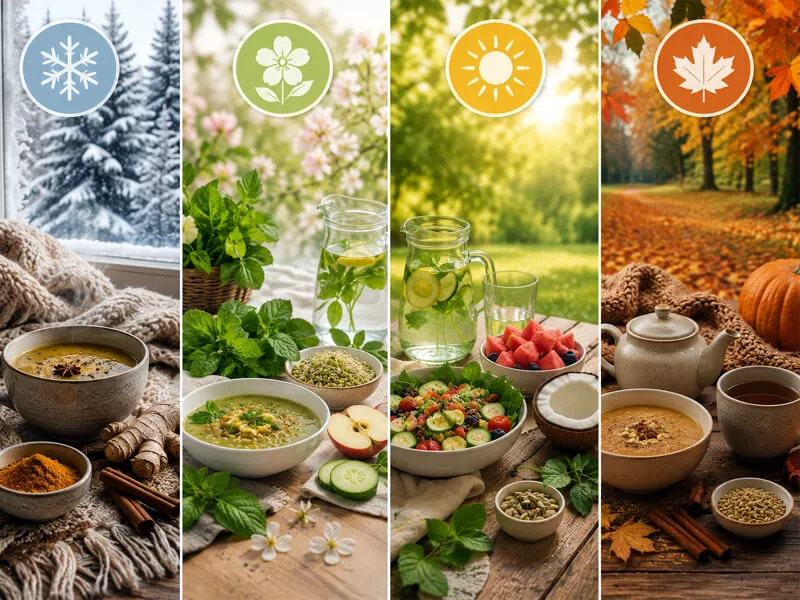
Winter Wellness Habits
During colder months:
- Choose warm, nourishing meals
- Maintain regular sleep habits
- Stay physically active
- Support hydration
Summer Wellness Habits
During warmer months:
- Drink enough fluids
- Choose lighter meals
- Maintain balanced activity levels
- Protect skin from environmental factors
Seasonal Transitions
Changing seasons may require adjustments in:
- Diet
- Sleep schedule
- Activity levels
- Self-care routines
Ayurvedic Lifestyle Tips for Better Everyday Wellness
Creating a healthy lifestyle does not require major changes overnight.
Simple improvements may include:
| Wellness Area | Ayurvedic-Inspired Habit |
|---|---|
| Sleep | Maintain consistent sleep timing |
| Diet | Choose fresh, balanced meals |
| Stress | Practise relaxation techniques |
| Movement | Include regular physical activity |
| Mindfulness | Create moments of calm |
| Self-care | Follow consistent personal care habits |
Common Mistakes People Make When Starting Ayurveda
Expecting Immediate Changes
Ayurveda traditionally focuses on consistency and long-term lifestyle balance rather than quick fixes.
Following Random Advice
Every person has different wellness needs. General information may not apply equally to everyone.
Ignoring Basic Lifestyle Habits
Herbal support works best alongside:
- Balanced nutrition
- Quality sleep
- Movement
- Stress management
How to Start Ayurveda Safely
If you are new to Ayurveda, begin with simple lifestyle improvements:
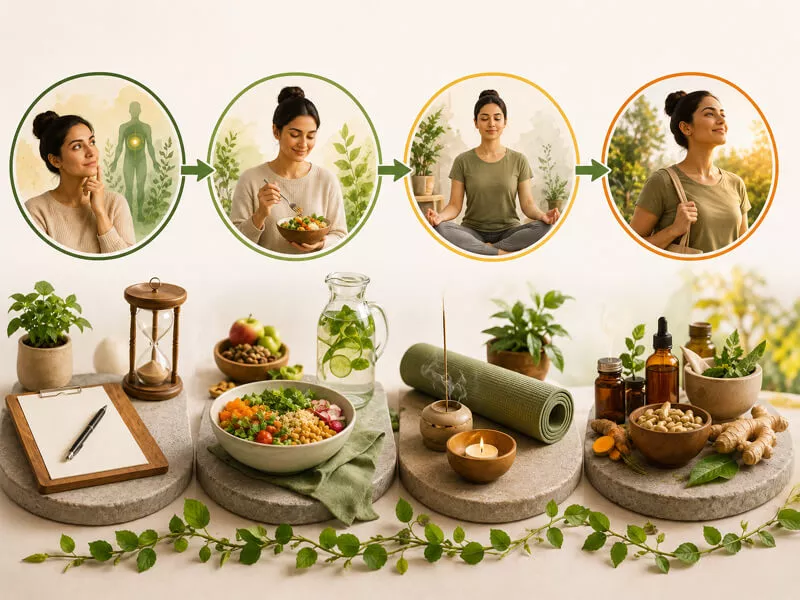
Step 1: Improve Your Routine
Create regular times for:
- Sleeping
- Eating
- Working
- Relaxing
Step 2: Focus on Nutrition
Choose a balanced diet with fresh foods.
Step 3: Add Mindful Practices
Try:
- Meditation
- Yoga
- Breathing exercises
Step 4: Explore Herbal Wellness Carefully
If considering Ayurvedic herbs, choose trusted sources and seek professional guidance when necessary.
Ayurvedic Wellness Support for Modern UK Families
Ayurveda can be adapted for different lifestyles, including families, professionals, and individuals looking for natural well-being approaches.
A family-friendly Ayurvedic lifestyle may focus on:
- Healthy meals
- Regular routines
- Outdoor activities
- Better sleep habits
- Mindful living
Exploring Ayurvedic Wellness Products and Guidance
Many people interested in Ayurveda look for traditional herbal wellness products that fit into their lifestyle.
When choosing Ayurvedic wellness support:
Look for:
- Quality ingredients
- Clear product information
- Responsible sourcing
- Transparent wellness guidance
Always follow recommended usage instructions and consult a healthcare professional if you have specific concerns.
Quick Wellness Checklist
Use this simple daily checklist:
✓ Drink enough water
✓ Eat balanced meals
✓ Move your body regularly
✓ Maintain healthy sleep habits
✓ Take time for relaxation
✓ Practise mindful living
✓ Support your wellbeing consistently
Speak With a Wellness Expert
Every individual’s wellness journey is different. If you want to explore Ayurveda for daily wellness in the UK, consider learning from qualified wellness professionals who can guide you based on your lifestyle needs.
Explore Ayurvedic wellness resources, discover traditional herbal support options, and build habits that support a healthier everyday routine.
Frequently Asked Questions (FAQs)
What is Ayurveda for daily wellness?
Ayurveda for daily wellness is a traditional approach that focuses on maintaining balance through lifestyle habits, nutrition, mindfulness, sleep routines, and self-care practices. It encourages healthy daily choices that support overall wellbeing.
Is Ayurveda suitable for modern UK lifestyles?
Yes, many Ayurvedic lifestyle principles can be adapted to modern UK living. Simple practices such as mindful eating, regular routines, relaxation techniques, and balanced nutrition can fit into everyday schedules.
What are the main benefits of an Ayurvedic lifestyle?
An Ayurvedic lifestyle may support:
- Better daily routines
- Mindful living habits
- Balanced nutrition choices
- Relaxation and stress management
- Overall wellness support
Ayurveda works as a holistic lifestyle approach rather than a quick solution.
Can Ayurveda support digestive wellness?
Ayurveda traditionally gives importance to digestive balance. Practices such as eating fresh meals, maintaining regular meal timings, and mindful eating are commonly included in Ayurvedic lifestyle routines.
Which Ayurvedic herbs are commonly used for wellness?
Some herbs traditionally used in Ayurveda include:
- Ashwagandha
- Tulsi
- Triphala
- Turmeric
Herbal products should be selected carefully, and professional advice may be helpful for individual needs.
Can Ayurveda help with stress and relaxation?
Ayurvedic practices such as meditation, yoga, breathing exercises, and consistent daily routines may support relaxation and a balanced lifestyle.
What is an Ayurvedic daily routine?
An Ayurvedic daily routine may include:
- Morning hydration
- Gentle movement
- Mindful meals
- Regular sleep schedule
- Relaxation practices
Is Ayurvedic skincare suitable for everyone?
Ayurvedic skincare focuses on natural care principles and lifestyle balance. However, skin types vary, so choosing suitable products and routines is important.
How can beginners start Ayurveda?
Beginners can start with small changes:
- Improve sleep habits
- Eat balanced meals
- Add gentle movement
- Practise mindfulness
- Create a consistent routine
Are Ayurvedic products safe?
Quality and suitability are important when choosing Ayurvedic products. Always check ingredients, follow usage instructions, and consult a healthcare professional if you have specific concerns.
Can Ayurveda replace medical treatment?
No. Ayurveda and herbal wellness practices should not replace medical diagnosis or treatment. They may be used as part of a healthy lifestyle approach.
Author Bio
Dr. Arindham Chatterjee
Founder – Global Ayucare
This article was reviewed by Dr. Arindham Chatterjee, founder of Global Ayucare. He writes about herbal supplements and natural wellness practices based on traditional herbal knowledge and publicly available research.
View Author Profile →
Disclaimer
This content is for educational and informational purposes only and should not be considered medical advice. Supplements and herbal products are not intended to diagnose, treat, cure, or prevent any disease. Please consult a qualified healthcare professional before starting any supplement or wellness routine.
